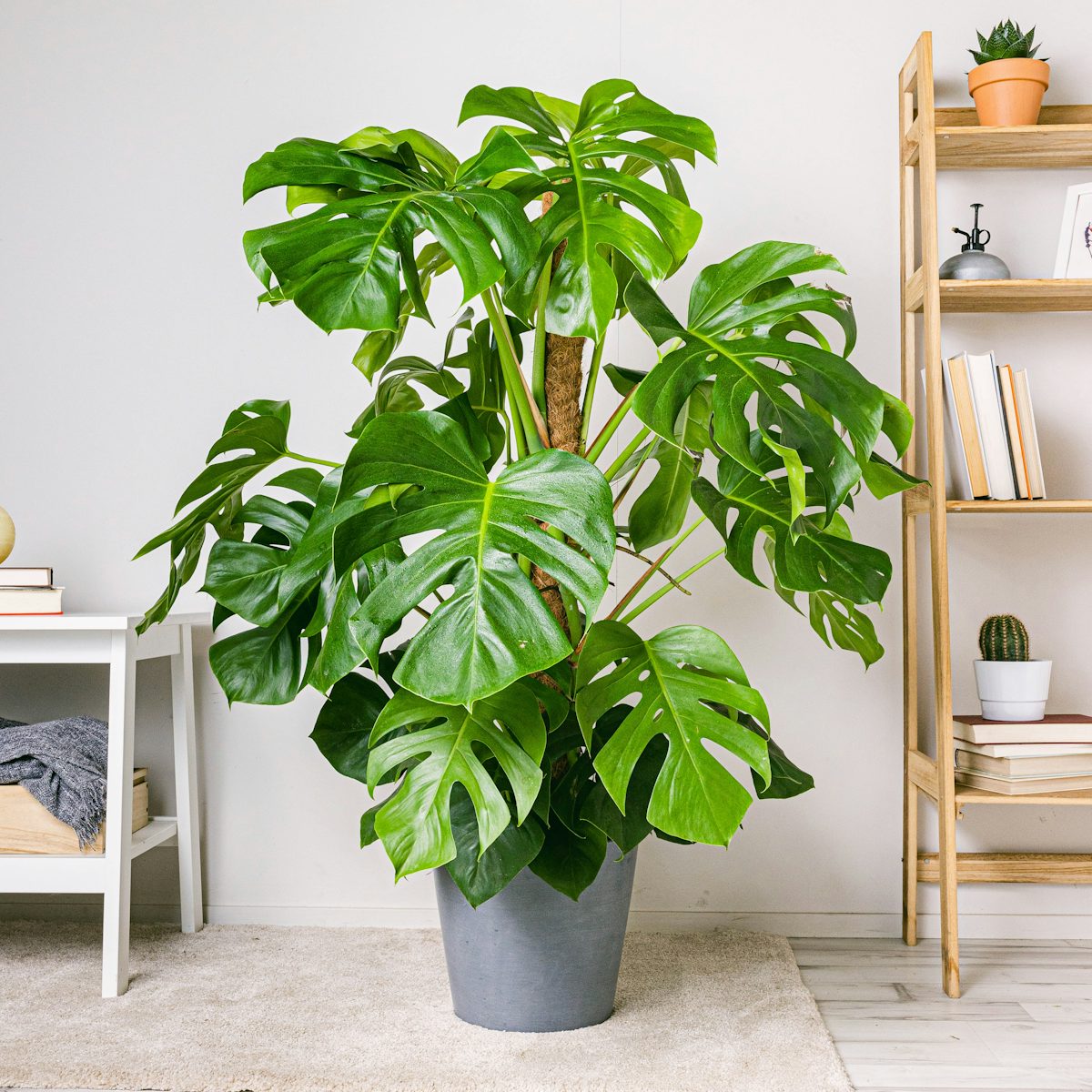
Monstera deliciosa Monstera deliciosa is a spectacular plant, mature, a strongly creeping, very impressive vine, spectacular leaves. In nature, it occurs in the tropical forests of Central and South America. The decoration of this unusual species are very large leaves, even in diameter 60 cm. Monstera deliciosa also produces numerous aerial roots, which give the plant character and enable it to climb upwards. Young leaves are light green, however, over time they become darker in color, and characteristic indentations and holes appear on their surface. Adult specimens surprise with interesting flowering. They produce beautiful, spiky inflorescences, surrounded by cream, vaginal pituitary gland. The plant also produces edible fruit with a sour pineapple flavor, which, however, rarely appear at home. Monstera deliciosa impresses with its size, habit, exotic appearance, and additionally has low cultivation requirements. Older individuals achieve even 20 meters high in natural conditions. In our climate zone, you can easily adjust the height of the monstera by trimming its stems, thanks to which the plant will spread at the height we want. With proper care at home, the monstera can grow to a height of approx 1,5-2 meters, and its leaves delight with their enormous sizes.
Values of Monstera deliciosa Monstera deliciosa:
- impressive, decorative leaves
- interesting shape
- elegant green leaves
- characteristic holes in the plate
- wonderful interior decoration
- low cultivation requirements
- It is not safe for pets, especially cats. Monstera is a poisonous plant.
- Excessive watering may damage its leaves. Always remember before watering, to check the soil first.
- Light: Adapts to any light level, but prefers indirect light.
- Watering: Moderate: When the substrate dries.
- Humidity: It tolerates all levels of humidity well.
- Top tip: Withstands low temperatures, but not frost. Below 0°C, the leaves will suffer cold burn.
Light deficiency may manifest itself as thin, flexible and stretching shoots. In a place that is too dark, the leaves will be smaller and lack characteristic holes, and the internodes will become much longer. The lower leaves of the plant may turn yellow and lose color. Excessive sunlight can cause leaves to fade or develop yellow-brown spots and sunburn..
Fungal diseases We can recognize it by brown or almost black spots on the leaves with a lighter one, yellow halo. Proper care of monstera in the case of diseases, it involves taking the plant out of the pot and checking the condition of the roots. If we notice rotten parts, we remove them, we spray the roots and leaves with a fungicide, for example Topsin. It is worth repeating the spraying 2-3 times after 7-10 days, to get rid of all the spores. However, be careful about soaking the young ones, still curled leaves - that's something, which this plant does not forgive and rejects young leaves.
During the growing season, we feed the monstera with liquid fertilizer in accordance with the dose recommended by the manufacturer, in autumn and winter, fertilization should be limited, unless we illuminate the plant, and the pace of growth has not slowed down. It is worth using different types of fertilizers and biohumus alternately, to provide the plant with all the ingredients necessary for proper growth. The plant's need for nutrients and water is influenced by its location, where it is located. The darker the position, the less abundant watering and fertilization the plant needs.